
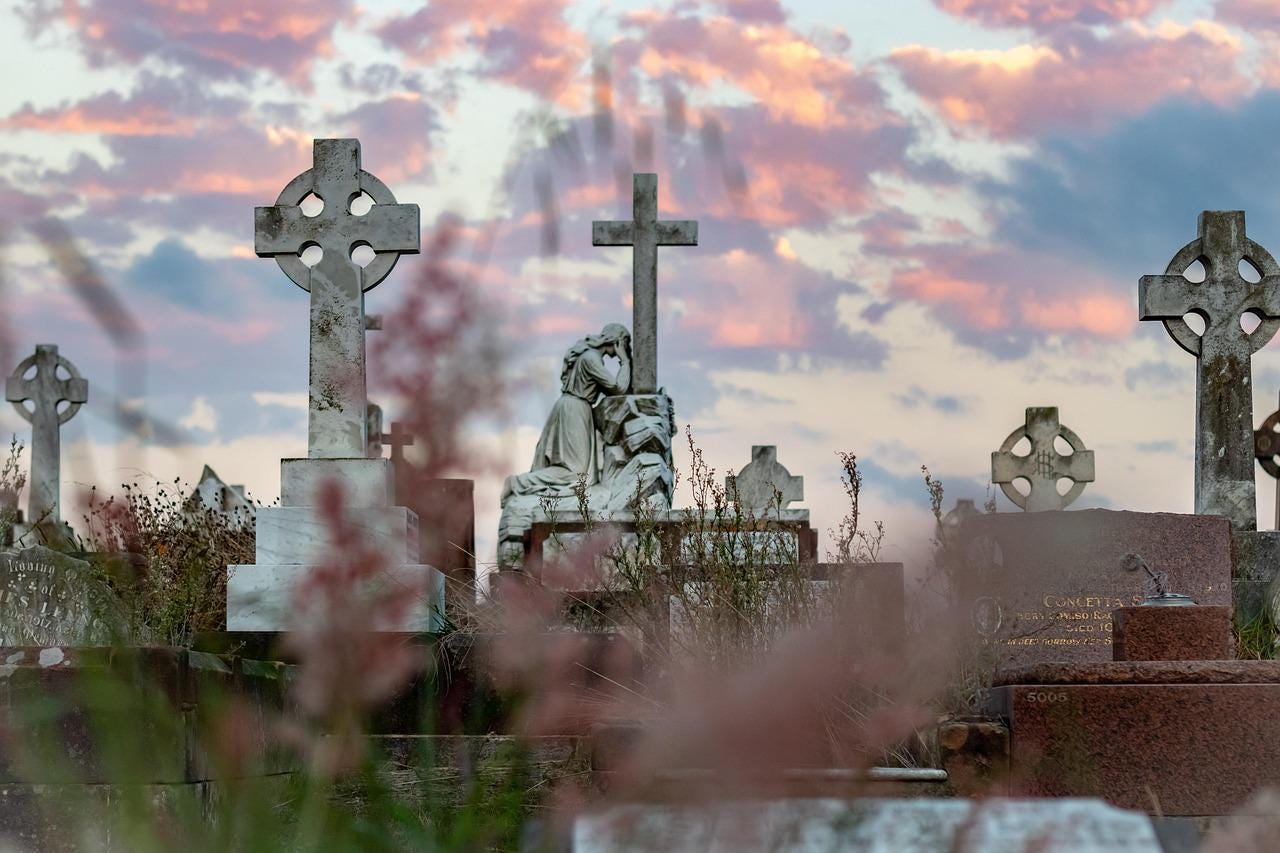
Over the past decade or so, as I’ve walked the path of a witch, I’ve noticed a growing trend of labeling every aspect of our practice. Recently—especially as I’ve delved deeper into the study and practice of death magic—I’ve seen terms like “death witch,” “death magic,” “death worker,” “death practitioner,” and “necromancer” being tossed around almost interchangeably. It’s become so common to hear these titles used that I think many forget to consider their true meanings, which has sparked plenty of debates and disagreements within the community. Personally, I find this a bit absurd.Thanks for reading! Subscribe for free to receive new posts and support my work.SubscribeIn my view, what we do is far more important than the labels we give it. Are we corporate leaders, after all? The essence of the work we do holds far more weight than the title we slap on it. But, to clear up some of the confusion that often arises, I’ll break down a few distinctions. Honestly, the differences are minimal in most cases, with the exception of “death worker,” but for the sake of clarity, let’s take a closer look at what each term might imply.
Death Magic
When someone asks, “What is death magic?” it’s kind of like asking, “What is magic?” The answer will depend on who you ask, because each practitioner brings their own experiences and perspective to the craft. That said, death magic is typically understood as a form of magic practiced by witches who focus on working with the dead. This could mean communicating with spirits—whether human, animal, or otherwise—or connecting with the energy and forces that surround death itself.Death magic isn’t limited to a single, rigid practice; it’s a deeply personal, transformative journey that explores the space between life and death. Through practices like ancestral work, spirit communication, or rituals to honor the deceased, death magic allows practitioners to engage with the unseen realms that lie beyond the physical world.
Death Witch
A “death witch” or “death practitioner” is someone whose magical practice revolves around working with the dead. Like death magic, this can involve a variety of practices—talking to spirits, working with the energy of death, or connecting with ancestral forces. While the term “death witch” might conjure images of dark rituals, it simply refers to someone whose work is closely tied to the mysteries of death and the afterlife. The focus is on honoring, communicating with, and learning from those who have passed, using those connections to deepen one’s magical practice.
Deathwork
“Deathwork” is a broader term and can refer to one of two things. On the spiritual side, it may describe someone who works with the incorporeal, such as a death witch communicating with spirits or exploring the energies of death. On the other hand, it can refer to people who work in professions that involve direct interaction with the dead in the physical realm—morticians, funeral directors, hospice workers, and so on. These individuals are often referred to as “death workers,” and their roles are focused on the practical aspects of death rather than the magical or spiritual side. While both paths are tied to death, they differ in focus: one is more spiritual and magical, exploring the unseen, while the other is grounded in the physical, everyday aspects of death care.
Death Worker
A “death worker” is typically someone whose work is related to death but without a direct connection to magic or witchcraft. These people might work in fields like mortuary care, hospice nursing, or funeral home management. Death workers engage with the dead and the dying on a day-to-day basis, offering practical support, care, or guidance in the physical realm. While their work is deeply connected to death, it is more about respect and care than about spiritual or magical practices.
Necromancy and Necromancers
The word “necromancy” comes from the Greek words nekros (meaning “corpse”) and manteia (meaning “divination” or “prophecy”). So, necromancy is traditionally understood as the practice of communing with the dead—whether through divination, spirit summoning, or gaining insights from the deceased. In its truest sense, necromancy is a magical practice where a necromancer seeks to communicate with the dead to gain knowledge or foresight. You’ll find references to necromancy in historical texts and literature (the Odyssey), where it’s often tied to themes of prophecy, raising the dead, and the unseen realms.I will preface this by saying what I am about to say will upset many people, but as an overview, death magic is what you make it. It only requires that you incorporate the element of death into your magic. Whether that be the essence of death itself or the individual spirits of the dead.